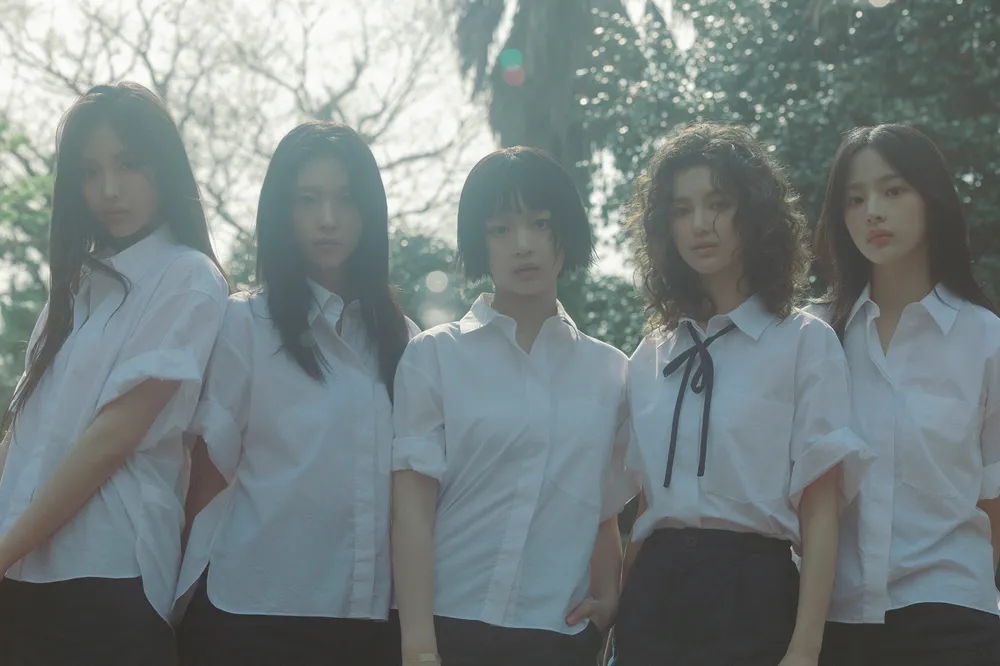
(Photo courtesy of ADOR)
[Hanteo News = Reporter KIM YEONWOO] Former ADOR CEO Min Hee-jin has issued a counterstatement challenging HYBE's explanation regarding the controversy surrounding NewJeans' exclusive contracts. Min's representatives claim that HYBE led the entire process, from drafting the contracts and revising key provisions to granting final approval, while ADOR operated under a structure that left it with little authority to make independent decisions.
Previously, on November 5 (local time), The New York Times (NYT) published a report based on exclusive contracts signed by the NewJeans members while they were minors. The report raised concerns about provisions related to the protection of underage artists and the use of their names, likenesses, and voices after their contracts ended.
In response, HYBE and ADOR released statements on November 6, explaining that the members' rights as minors had been protected through separate supplementary agreements. They also stated that the contracts had undergone approximately three months of communication with the members and their parents, legal reviews, and discussions about revisions before being finalized.
The companies further emphasized that ADOR's management, including then-CEO Min Hee-jin, had participated in negotiating the contractual language and ultimately signed the agreements.

(Photo courtesy of OK Records)
However, Min's representatives responded the same day with a statement titled "HYBE, It Is Time to Move Beyond the Absurd Narrative That Everything Is Min Hee-jin's Fault and Take Responsibility and Make Improvements for the Future of K-POP."
According to Min's side, ADOR did not have an independent legal team at the time. Instead, HYBE's legal department took the lead in drafting and revising NewJeans' exclusive contracts under the parent company's "Shared Function" system.
ADOR's role, they explained, was to communicate with the members' parents based on the draft contracts and relay their questions and revision requests to HYBE's legal team.
Min's representatives also disputed the suggestion that final approval rested solely with ADOR's CEO.
They claimed that the contracts required consultation and approval from HYBE's legal team, Chief Financial Officer (CFO), and Chief Executive Officer (CEO). They further noted that ADOR's board of directors at the time consisted of two HYBE-appointed directors and Min Hee-jin herself.
Under this structure, they argued, it would have been difficult for ADOR to proceed with the contracts without HYBE's consent.
Min's side also cited her previous attempts to secure independent authority over contract execution in 2024.
According to the statement, Min requested the authority to execute major agreements, including exclusive contracts, during a meeting with then-HYBE CEO Park Ji-won on January 25, 2024. She subsequently submitted proposed amendments to the shareholders' agreement reflecting those requests on February 16.
However, HYBE had previously stated that it rejected the requests in May of that year.
Min's representatives argued that this contradicted HYBE's explanation that ADOR had possessed independent decision-making authority over the contracts.
They also challenged HYBE's account of how expenses were allocated.
HYBE had claimed that ADOR's vice president rejected proposals to reduce the financial burden on the artists. Min's side, however, stated that when the NewJeans members were transferred from SOURCE MUSIC to ADOR, a decision had been made not to charge them for relevant expenses, including costs incurred during their previous trainee period.
They emphasized that the ability to negotiate certain expense-sharing arrangements did not mean ADOR had independent authority to determine the contracts' fundamental structure or major provisions.
Regarding clauses allowing the use of the artists' names, likenesses, and voices after contract termination, Min's representatives claimed that HYBE's legal team had drafted the provisions and explained them to the members' parents.
They argued that HYBE's explanation that separate consent would be required for actual use did not address the more fundamental question of who had decided to include those rights in the contracts and who had approved the provisions.
As for HYBE's emphasis on approximately three months of discussions and the parents' signatures, Min's side acknowledged that questions and answers had been exchanged and that some contractual language had been revised.
However, they maintained that these were limited changes intended to prevent misunderstandings and did not alter the underlying structure through which the contracts' key provisions were drafted and ultimately approved.
Min's representatives also raised broader concerns about HYBE's multi-label system.
They argued that the structure concentrates actual decision-making authority at the parent-company level while placing external responsibility primarily on the labels that formally enter into contracts.
"What needs to be explained now is not who signed the contracts, but who actually had the authority to draft and change their key provisions," the statement emphasized.
Min's side called for greater transparency regarding the contracts' drafting and approval procedures, as well as the reasonableness and fairness of their terms.
With HYBE and Min Hee-jin's representatives presenting conflicting accounts of who held authority over the drafting and approval of NewJeans' exclusive contracts, the controversy is now extending beyond the agreements themselves to broader questions about HYBE's multi-label operating structure and the extent of its labels' actual independence.
yeonwoo38@hanteo.com


