(Photo courtesy of CHOI CREATIVE LAB)
[Hanteo News = Reporter KIM YEONWOO] H1-KEY, the girl group that captured public attention with ‘Rose Blossom’ and has steadily established its musical presence, has faced an unfortunate setback following controversy over the AI-generated music video for its new single ‘Unbelievable’. Although the group attempted a bold transformation with a new genre and concept, the music video, which should have highlighted the members' charms, instead became the center of criticism.
H1-KEY (SEOI, RIINA, HWISEO, and YEL) released its new digital single ‘Unbelievable’ on November 13. The song marks the group's first venture into electronic pop, presenting a more powerful transformation while maintaining its signature healthy and confident image.
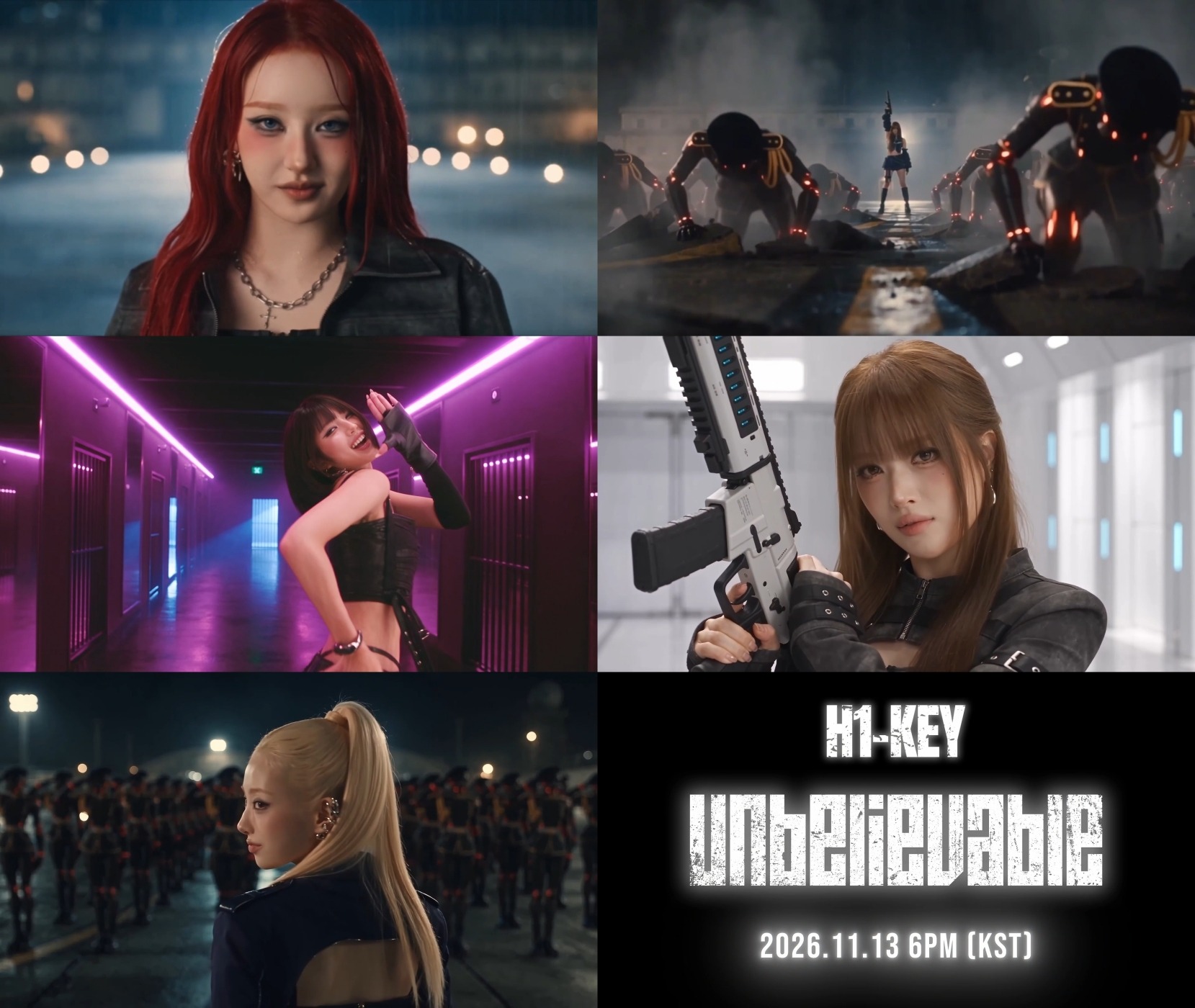
The music video teaser released ahead of the comeback also hinted at this new direction.
The footage featured YEL traveling through a mirror from a mysterious room into another dimension, members equipped with weapons, and a robotic army preparing for deployment, creating scenes reminiscent of a science-fiction action film.
RIINA communicating through a radio and SEOI and HWISEO aiming their weapons further raised expectations for a different side of H1-KEY.
However, the mood shifted after the full music video was released.
Criticism emerged over what appeared to be extensive use of generative AI throughout the video, with viewers pointing out unnatural facial features and movements.
Fans were particularly disappointed that the members' actual appearances and individual personalities were not sufficiently represented.
(Photo courtesy of HWISEO's Bubble)
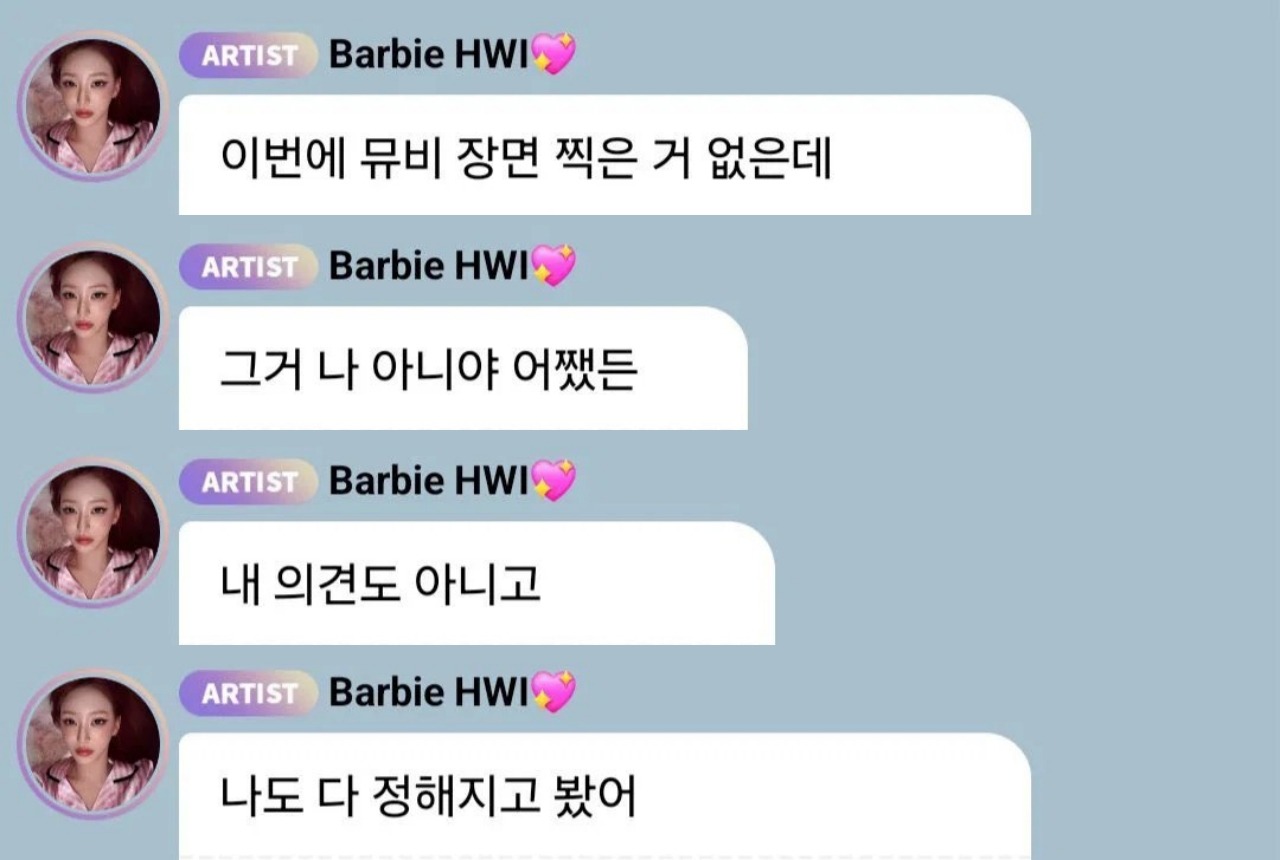
The controversy intensified following remarks made by member HWISEO.
Through a fan communication platform, HWISEO made comments suggesting that she had not personally participated in filming the music video.
She also indicated that her opinions regarding her appearance in the video and its production process had not been sufficiently reflected, raising questions among fans about the members' involvement and consent.
In response, the group's agency, CHOI CREATIVE LAB, explained that the members had been informed about the music video's production process in advance and had given their consent.
According to the agency, the members had filmed against a chroma key background, although the specific scenes and directorial approach had not been shared with them beforehand.
The agency subsequently suspended public access to the music video, stating that it had made the decision out of respect for fans' opinions.
The song's choreography and stage performance can now be viewed through a separate performance video.
However, the controversy is difficult to dismiss as merely an issue of the technical quality of AI-generated visuals.
AI technology is already being utilized in various ways throughout the K-POP industry.
SEVENTEEN's ‘MAESTRO’ and JEON SOMI's ‘CLOSER’ are among the projects that have incorporated AI as a tool for visual production.
Using new technology to create scenes that would otherwise be difficult to realize and expand the creative possibilities of music and concepts is undoubtedly a meaningful endeavor.
Nevertheless, the use of advanced technology does not automatically guarantee compelling content.
Music videos, particularly in the idol industry, serve a purpose beyond simply translating music into visuals.
They are also essential platforms for showcasing the unique qualities of artists, including their facial expressions, movements, styling, and performances.
Fans look forward to music videos not only for their new fictional universes and cinematic visuals, but also for the opportunity to see the artists themselves within those creative settings.

(Photo courtesy of CHOI CREATIVE LAB)
In recent years, idol groups from smaller entertainment agencies have also been building their competitive strengths through distinctive concepts and high-quality content.
Even with limited production resources, these agencies have continued exploring creative ways to highlight their groups' identities and individual charms.
Against this backdrop, H1-KEY's latest creative decision feels particularly disappointing.
In the process of adopting new technology, the consideration given to how the members' personalities and presence would be presented was not sufficiently evident in the final product.
Following the withdrawal of the music video, fans responded positively to a practice video released afterward.
Some commented, "This is the music video I wanted," while others expressed similar sentiments, saying, "We're not asking for a blockbuster-level production. If production resources are limited, even a simple performance video filmed against a white wall would be fine."
These reactions reflected fans' desire to see the members' authentic appearances and performances rather than elaborate visual effects.
Of course, the controversy should not diminish the significance of H1-KEY's musical experimentation.
The group's willingness to explore a new genre and concept remains a meaningful step forward.
However, effectively communicating such creative ambitions requires consideration of the artists' identities, their involvement in the production process, and the fundamental qualities fans expect from idol content.
New technology becomes truly meaningful when it helps artists shine.
Paradoxically, the more technology advances, the more important the human presence at the heart of the creative work becomes.
yeonwoo38@hanteo.com


