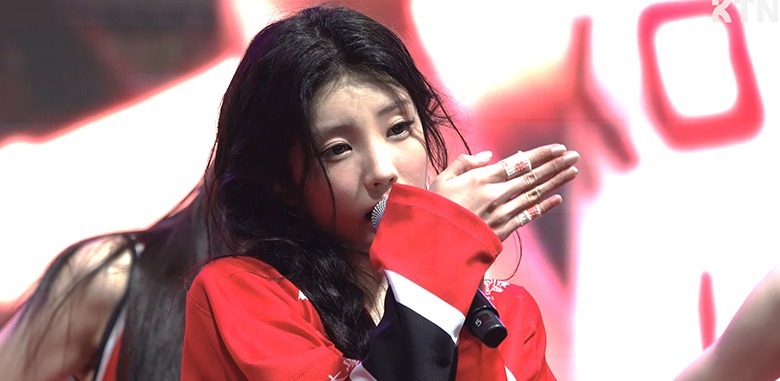
Every May, university campuses across the country are filled with festival banners. On stage, K-POP idols dressed in school uniforms perform, while every corner of the campus buzzes with energy. These festivals, commonly referred to as “Daedongje,” have now become spaces that hold special meaning for both students and idols alike.
Today, university festivals are widely known under the name “Daedongje.” The term became established in the 1980s under the influence of student activist culture, symbolizing the “unity” and “solidarity” of all members of the community. Its original purpose was to serve as a place of communication where everyone could come together, connect, and strengthen their bonds.
The history of university festivals dates back to the 1970s. Influenced by Western-style carnivals, they began as events where romantic sentiment coexisted with resistance against the Yushin regime. In the 1980s, academic festivals opposing military dictatorship and dynamic performances continued to emerge, and the festivals themselves became a form of social expression. Following the IMF foreign exchange crisis in the late 1990s, however, university festivals gradually shifted toward entertainment-centered events amid the intensifying wave of neoliberalism and consumer capitalism. Within this flow, K-POP idol performances rose to become the core content of university festivals.
This transformation is not simply a “distortion” of the original purpose, but also a natural evolution reflecting the trends of the times. For university students exhausted by academic pressure and job hunting, performances by their favorite idols offer more than simple entertainment — they become a way to recharge emotionally. The opportunity to see idols, who are usually only visible in large concert arenas, up close in the familiar setting of a campus has the power to instantly elevate the festival atmosphere. In fact, whenever the idol lineup is announced, university communities erupt with excitement, and this enthusiasm acts as a catalyst that boosts overall participation and unity throughout the festival.
For idols as well, university festivals are more than just another performance schedule. When they coincide with a new album release season, they naturally become promotional stages for new songs, while the everyday and open atmosphere of a campus creates lively video content that is difficult to produce in sophisticated concert venues. Performances featuring creatively modified school uniforms or lyrics incorporating the university’s name quickly spread among fans, generating a powerful viral effect. Furthermore, university festivals also serve as an opportunity for college students who feel burdened by concert ticket prices to experience idols in person for the very first time.
Of course, issues such as inconvenience for enrolled students caused by the influx of outside fans and problems like student ID trading still remain challenges to be solved. However, these are issues that can be addressed through improvements in festival operations, not reasons to reject idol performances themselves. Many universities are already seeking realistic solutions, such as designated areas exclusively for enrolled students and advance reservation systems.
University festivals and K-POP need one another. Students get to enjoy top-tier performances right on their campuses, while idols meet some of the most honest and energetic audiences possible. As this relationship continues to develop in a healthier and more enjoyable direction, campuses in May will become unforgettable spaces for everyone.
![[Daily Ranking: May 17th] NMIXX’s ‘Heavy Serenade’ Places 1st](/_next/image?url=https%3A%2F%2Fhanteoresource.s3.ap-northeast-2.amazonaws.com%2Fhanteonews%2Farticle%2Fthumbnail%2Fbot%2Fchart%2Falbum%2Fdaily%2Fen%2F1st.png%3Fv0.0.1&w=3840&q=75)


